Showing posts with label Medications. Show all posts

Sunday, August 25, 2013

Unfilled Prescriptions 2


I visited the topic of Unfilled Prescriptions a few years ago.  It seems that the issues leading to not filling the prescriptions or what is sacrificed in order to fill them have not changed.

According to the report, "Patient Compliance, Disease Management and Consumer Outreach, " 20% of new prescriptions go unfilled, while up to 85% of prescriptions never get refilled.  The leading factor for non-compliance is believed to be a break-down in communication between patients and physicians.  Another contributing factor is the costs of the medication for those with and without medical insurance.

One way to cut down on the costs is to ask if there is a generic equivalent.  Be careful, there are some medications that are not exactly equivalent. Discuss this your medications and this your health care provider.


Karen Rowan, Managing Editor for MyHealthNewsDaily has put together some information regarding this topic as well. You can heck it out as well.

Saturday, October 2, 2010

Unfilled Prescriptions

A study done by the Journal of General Internal Medicine shows that a significant number of prescriptions go unfilled. In this study, researchers found that among more than 75,000 Massachusetts patients given drug prescriptions over one year, 22 percent of the prescriptions were never filled. The rate was even higher -- 28 percent -- when the researchers looked only at first-time prescriptions.

Letting prescriptions go unfilled is called "non-adherence." Such "non-adherence," the study found, was common even among patients prescribed drugs for chronic conditions that can have serious health consequences.

The big question is why?  Exactly why many patients did not fill their prescriptions is unclear, but several reasons are possible.
  1. The patient does not know why they are taking the medication
  2. The patient's condition does not cause any symptoms
  3. The patient cannot afford the medication(s)
  4. The patient has concern about side effects
  5. The patient doesn't want to take any medications
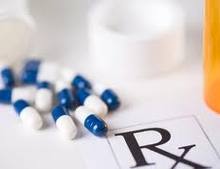
When health problems cause few or no symptoms -- as with high blood pressure or high cholesterol -- people may not see the need for a medication. Although there are many diagnoses that have no symptomotology, your disease is causing damage. When symptoms do occur, it will be more difficult to control and treat.

"If they do not fully understand the reason that they are being prescribed the medication, they may be less likely to take it," lead researcher Dr. Michael A. Fischer, of Brigham and Women's Hospital in Boston, told Reuters Health.  If you don't know why you are taking a medication, ask your doctor. It is our job to educate you about your diagnosis and advise you regarding all treatment options.

Cost could also be an issue, Fischer added -- particularly when people are unsure of why a drug is being prescribed.   All of the patients in the study had health insurance. But even with coverage, people may have high co-payments for medications or may be prescribed a drug not covered by their plan, Fischer and his colleagues note.

No matter what the reason, patients should not hesitate to talk with their physicians regarding their concerns. We especially need to know if you encounter side effects.

What's really scary about this study, though, is that these numbers reflect the behavior of people with health insurance (Massachusetts has a 97 percent insured rate). The numbers are undoubtedly higher among the uninsured.

Check out Trisha Torrey's blog as she takes the patients perspective. She gives the patient's responsibilty regarding prescriptions.

Thursday, June 24, 2010

The Little Pink Pill - Part 2

Since my initial blog article (The Little Pink Pill), the US Food and Drug Administration's (FDA) Reproductive Health Drugs Advisory Committee voted 10 to 1 on June 18 that flibanserin, 100 mg (Girosa; Boehringer Ingelheim), was not significantly better than placebo for hypoactive sexual desire disorder (HSDD); they also voted unanimously that the benefits did not compensate for its adverse effects, which may include loss of consciousness and depression.

Even before the advisory committee’s meeting debate was triggered whether this is a long sought step toward equality for women or is it the pharmaceutical industry’s fabrication of a questionable “disorder” (see below) in order to sell unnecessary and potentially dangerous drugs?

The disorder is Female Dysfunctional Syndrome (FDS) also called Hypoactive Sexual Desire Disorder (HSDD).  It is a deficiency or absence of sexual fantasies and desire for sexual activity, as defined by the American Psychiatric Association (APA). The women are not averse to sex. They just they don’t care about it and stop thinking about it.  They have problems with sexual desire, arousal, or orgasm and unexplained loss of sexual thoughts, fantasies and desire. They also have a low sex drive and a slow response to stimulation. Some complain of an inability to experience an orgasm. Researchers suggest that approximately 10% of women suffer from this disorder.

Because the definition is vague and there are significant differences in sexual interest levels and in sexual functioning among women; the question is what is normal?  Another question may be what led to this change? Many say that a decreased sex drive in a woman may be a normal part of aging, a dysfunctional relationship (i.e., an abusive partner), stress, a lack of exercise, diet or other medical problems.

Is this a real syndrome and if so does it need to be treated with medication? Many say that the pharmaceutical industry has played a central role in defining FSD/HSDD as an official psychiatric disorder and has exaggerated its scope by funding key research.

What do you think?

Sunday, June 13, 2010

The Little Pink Pill

"The little pink pill” This is what they are calling a new drug (flibanserin) that is said to "boost women's sex drive. The Food and Drug Administration will be considering endorsing this medication. The medication is said to increase women’s sex drive, but the exact mechanism is unknown. This medication was initially being tested as anti-depressant, but if was not effective. What was noticed is that it had an interesting side effect – increasing the women’s sexual desire. Its side effects are nausea, dizziness, and drowsiness.

Since the arrival of sildenafil citrate (Viagra) on the scene in the late 1990’s, pharmaceutical companies have been looking for an equivalent medication for women. Pfizer and others hoped sildenafil citrate would do for women what it has done for men, but it didn’t.

Women's needs and sex drives are not as straight forward as men's. Several things can influence a woman's sex drive. These may include stress, lack of exercise, diet, medical problems, aging, a stressful relationship or lack of a relationship. I will get deeper into the reasons for decreased sex drive in women in the future.